
STAYING FIT WITHOUT TOUCHING THE PAVEMENT!
Nobody enjoys being injured, especially runners! Every runner knows the frustration of being sidelined with an injury. An injury doesn’t mean you need to stop moving, there are multiple other options for runners regardless of your injury, whether it is due to plantar fasciitis, patellofemoral pain, shin splints, achilles tendinopathy or a grumpy hamstring.
Remaining fit through rehabilitation is beneficial for healing, recovery and mental health!
Have a read along for some great options:
cardio vascular fitness
Swimming
Lap swimming
Strengthening exercises in the pool (or join a Hydrotherapy class!)
Deep water running/aqua jogging (running in the deep end of the pool)
You may want to use an aqua jogging belt to begin with
Keep your upper body straight
Knee up/foot down: Run using a higher knee lift and a compact back kick. Avoid bring the legs too far forwards, focus on the back half of the run
Don’t forget to get the arms pumping!

Stationary cycling
Stationary cycling on a bike ergometer is a great way to keep lower limb strength and cardiovascular fitness through injury.
At times it can even be appropriate for patients who are in a CamBoot or Aircast Boot to stationary cycle in their boot (Always check with your Physiotherapist first).
Walking (On solid ground with good supportive footwear)
Walking is a lower impact activity that is appropriate for most injuries. It helps not only with retaining fitness but also encourages patients to get outside and most importantly to keep moving!
Ski Ergometer/Rower/Cross trainer/Elliptical trainer
LEVER UP!
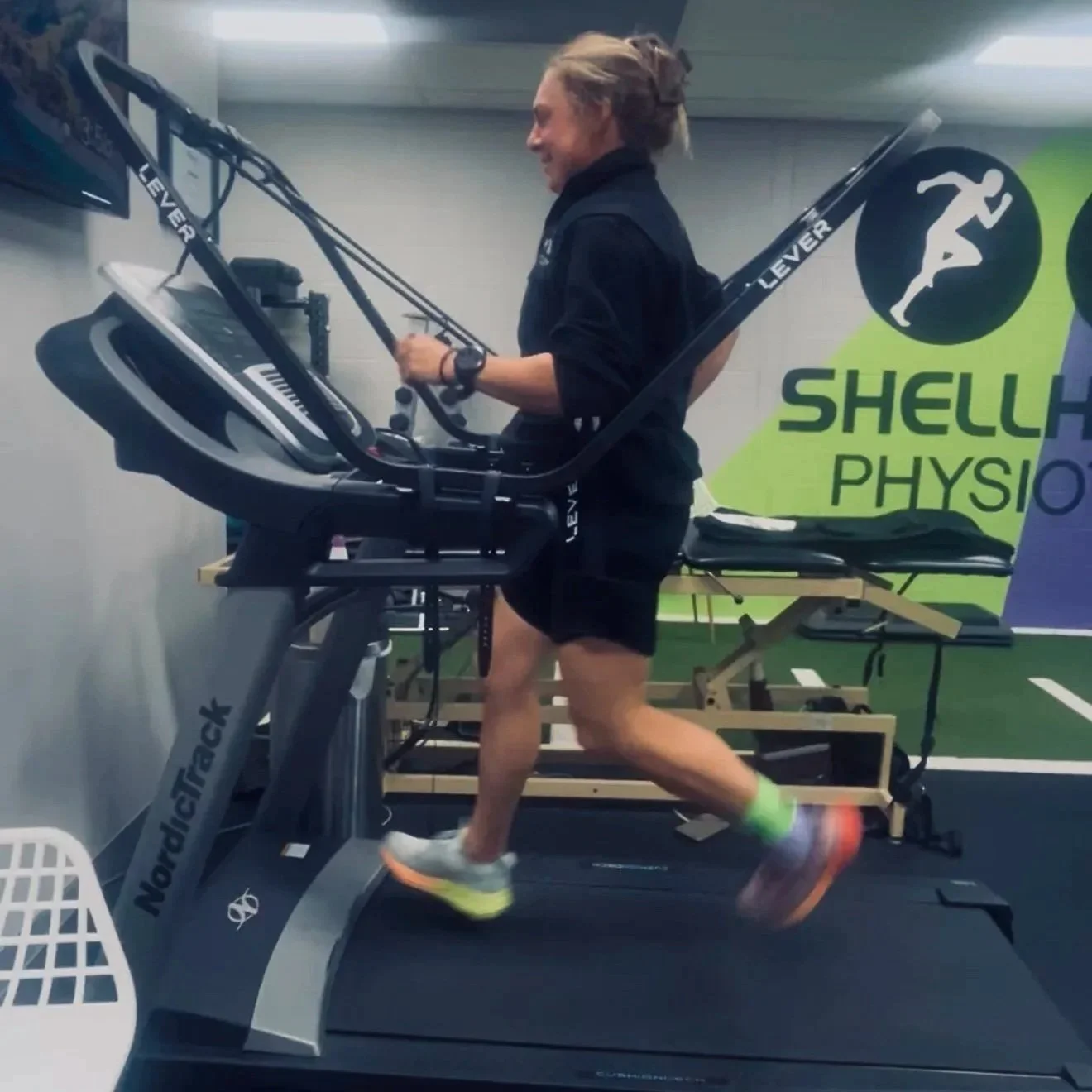
LEVER Up is our new favourite tool at Shellharbour Physiotherapy. It is a portable device that attaches to the treadmill in the gym and connects to purpose built LEVER Up shorts to partially support your bodyweight whilst running on the treadmill.
LEVER Up can offload up to 20kg of body weight, this lowers the impact and load on your joints, muscles and ligaments in the lower limb.
This is useful as it reduces stress and loading on injured tissue allowing structures to continue to heal whilst you can work to retain your cardiovascular fitness and running form.
As your injury improves you can reduce the amount of support, slowly progressing back to a return to full ground-contact running. In this way it helps to bridge the gap between rest and return to run.
LEVER Up is always most beneficial when used in conjunction with an appropriate rehabilitation plan supervised by a Physiotherapist.
STRENGTHENING
Gym strengthening work
It is always best to follow a structured strengthening program given to you by your physiotherapist to cater for your unique injury
Pilates + Yoga
Rock climbing
Other aspects to consider
Footwear
Having good supportive footwear when injured is key to supporting your injury and recovery. Wearing supportive joggers when doing activity is essential
In the summertime ‘Archies’ are a great option for breathability, comfortability and also have in built arch support. They now come in both thongs and slide options
Work + Home life
Depending on how physical your workplace/home life is, this can also impact on recovery. Remember to take notice of what you get up to in and out of your work to ensure you are loading appropriately and not overdoing it. Your physiotherapist can help with this
Mental Health
If running is your main form of exercise/hobby being sidelined can be tough! It is important to make sure you are taking care of your mental health during this time and looking for alternative activities you can enjoy
For example: meditation, going outside in nature, trying a new activity/class, etc
Fuelling for rehabilitation
Checking in with a nutritionist is a great way to ensure you’re fuelling your body appropriately to assist with healing
Sometimes being sidelined can have a positive aspect in the fact that it can open you up to trying new forms of exercise that you may not have thought about trying before.
Physiotherapists can create a return to run plan incorporating different aspects of the above options catered to you, your injury and your lifestyle. To book a consultation with one of our physiotherapists please call 4296 1555 or book online.