
GLP-1 WEIGHT-LOSS MEDICATIONS: WHY EXERCISE AND STRENGTH MATTER
GLP-1 Weight-Loss Medications: Why Exercise and Strength Matter
Over the past few years I have begun seeing more and more patients who are choosing medications such as Ozempic, Wegovy and Mounjaro to assist with their weight management.
For many people, these medications can be extremely helpful. They can reduce appetite, increase feelings of fullness and support significant weight loss. They may also assist with the management of conditions such as Type 2 diabetes and other obesity related health concerns.
However, as the use of these medications continues to grow, health professionals are becoming increasingly aware of something that can easily be overlooked:

Not all weight lost is body fat.
Some of the weight lost can also come from lean tissue, including muscle. This makes maintaining muscle strength and physical function an important part of the weight loss journey… not just simply being happy to watch the numbers on the scales drop.
In response to this growing area of healthcare, Exercise & Sports Science Australia (ESSA) has released guidance highlighting the role of structured exercise, and Accredited Exercise Physiologists (AEPs) in supporting people using these medications. More recently, exercise and sports science organisations from around the world have joined together to call for exercise to be incorporated into the care of people using GLP-1 and related weight-management medications.¹˒²
What Are GLP-1 Weight Loss Medications?
GLP-1 medications work by mimicking hormones naturally produced within the body that are involved in appetite, feelings of fullness and blood sugar regulation.
Put simply, they can help people feel fuller for longer and feel less hungry, which can result in eating less and losing weight.
While some of these medications were initially developed for Type 2 diabetes, medications in this family are now also used for weight management.
Research has shown that some of the newer medications can produce significant weight loss.² However, both ESSA and the International Joint Statement emphasise that medication should form part of a broader approach to health, alongside appropriate nutrition, physical activity and ongoing healthcare – and not be considered a standalone treatment.
The Part of Weight Loss We Don't Talk About Enough: Muscle
When most of us think about losing weight, we think about losing body fat.
But when body weight decreases (particularly when significant amounts of weight are lost) - the body can also lose lean tissue.
Current research reviewed in the International Joint Statement suggests that approximately 20-40% of the weight lost during treatment with GLP-1 based therapies may come from lean tissue, although the exact amount varies considerably between individuals and researchers are still working to determine exactly how much of this represents skeletal muscle.³˒⁴
This doesn't mean people should be frightened of taking these medications or that muscle loss will occur to the same extent in everyone. These medications represent an important advancement in obesity care.
Instead, it highlights why we need to look at what types of tissue is being lost, not simply how much total weight someone is losing.
Why Does Maintaining Muscle Matter?
Muscle does much more than make us strong.
We rely on it every day to walk, climb stairs, get out of a chair, carry the shopping, maintain our balance and perform normal daily activities.
Muscle also plays an important role in how our bodies manage blood glucose and metabolism.³
As we get older, maintaining muscle becomes particularly important for helping us stay mobile and independent.
For someone who already has reduced muscle strength, chronic health conditions or mobility difficulties, losing additional muscle during rapid weight loss may have greater consequences. Both statements highlight particular concerns for older adults and people who already have low muscle reserves, where excessive muscle loss may contribute to frailty, reduced mobility and loss of independence.¹˒²
This is why strength training is important.
While exercise such as walking is fantastic for your health and can improve cardiovascular fitness, increase daily physical activity and provide numerous physical and mental health benefits - when it comes to protecting muscle and strength during significant weight loss, we also need to challenge our muscles.
This is where resistance or strength training becomes particularly important. Resistance exercise may include things such as:
Weights or resistance machines
Resistance bands
Body weight exercises
Functional movements such as sit to stands and step ups
Importantly, this doesn't mean everyone taking weight loss medication suddenly needs to start lifting heavy weights in a gym. The exercise needs to be appropriate for your body, your health and your current level of fitness.
Research cited within the International Joint Statement identifies structured exercise - particularly progressive resistance training - as one of the most effective approaches available for reducing muscle loss and maintaining strength during weight loss.⁵ It can also improve physical function, mental health and quality of life, with many of these benefits occurring regardless of what happens on the scales.
This is something I talk a lot about with my patients - exercise isn't just about helping you lose more weight. It is about helping you become healthier, stronger and more physically capable while you lose it.

What About When the Medication Stops?
For various reasons, some people eventually reduce or stop taking their GLP-1 medication.
Research cited in the International Joint Statement has found that weight regain can occur after GLP-1 treatment is discontinued.⁶˒⁷ The statement therefore highlights the importance of establishing sustainable physical activity and exercise habits that can continue beyond medication use.
Interestingly, research involving an earlier GLP-1 medication found that people who combined medication with supervised exercise had better weight loss maintenance after treatment than those who received the medication alone.⁸˒⁹
We don't yet know whether exactly the same effect occurs with all of the newer medications, and the International Joint Statement specifically identifies this as an area requiring further research.
However, developing strength, fitness and regular exercise habits while taking medication provides health benefits that extend far beyond body weight.
Why See An Accredited Exercise Physiologist?
Many people taking weight loss medication are also managing other health concerns.
These might include:
Type 2 diabetes
high blood pressure or cardiovascular disease
arthritis or joint pain
previous injuries
reduced balance
low fitness
chronic pain
other medications and medical conditions

This means that simply being told to "exercise more" may not be particularly helpful.
An Accredited Exercise Physiologist (AEP) is a university qualified allied health professional who specialises in prescribing exercise for people with chronic disease, injury and complex health conditions.
Rather than just giving everyone the same exercise program, as EP’s we are educated to assess factors such as strength, mobility, balance, cardiovascular fitness and physical function to develop an exercise program tailored to an individual’s health status, ability and lifestyle goals.
As someone's weight and fitness change, their exercise program can also be progressed accordingly.
Look Beyond the Scales
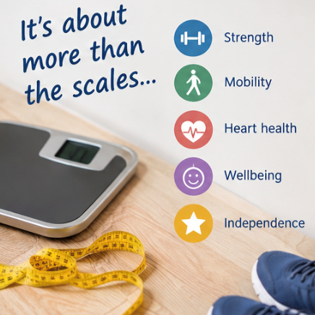
One of the most important messages from both statements is that weight loss should not be the only measure of success. ESSA describes the ideal outcome as reducing body fat while maintaining or increasing muscle, improving physical function and reducing chronic disease risk.
So alongside losing body weight, it may be worthwhile asking:
Am I getting stronger?
Is my fitness improving?
Can I perform everyday activities more easily?
Am I maintaining my independence?
These changes don’t show up on the bathroom scales, but they can make an enormous difference to long term health and quality of life.
The Bottom Line
GLP-1 weight loss medications represent an important advancement in the management of obesity and related health conditions.
But losing weight is only one part of improving health.
Maintaining muscle, strength, fitness and physical function matters too.
This is why both here in Australia and internationally exercise and sports science organisations are calling for structured exercise to be considered part of GLP-1 weight management care rather than simply an optional extra.
If you are taking a GLP-1 weight loss medication (or know someone who is), feel free to contact our team at Shellharbour Physiotherapy to find out more or book an appointment. Together I can help develop an exercise program appropriate for your health concerns, current physical ability and lifestyle goals, with a particular focus on maintaining strength and physical function throughout your weight loss journey.
Yours in Health,
Carol Robins
EXERCISE PHYSIOLOGIST
REFERENCES:
Exercise & Sports Science Australia (ESSA). Role of Exercise Physiology in the Safe Use of GLP-1 Medications: ESSA Policy Position. 18 March 2026.
Exercise & Sports Science Australia et al. Exercise and Physical Activity in the Era of Obesity Pharmacotherapy: A Call for Integrated, Multidisciplinary Models of Care to Ensure Safe, Equitable and Effective Use of GLP-1 and Related Weight-Management Medications. International Joint Statement. 2026.
Karakasis P, Patoulias D, Fragakis N, Mantzoros CS. Effect of GLP-1 receptor agonists and co-agonists on body composition: systematic review and network meta-analysis. Metabolism. 2025;164:156113.
Neeland IJ, et al. Changes in lean body mass with glucagon-like peptide-1-based therapies and mitigation strategies. Diabetes Obes Metab. 2024;26(Suppl 4):16–27.
Locatelli JC, Costa JG, Haynes A, et al. Incretin-based weight-loss pharmacotherapy: can resistance exercise optimize changes in body composition? Diabetes Care. 2024;47(10):1718–1730.
Wilding JPH, Batterham RL, Davies M, et al. Weight regain and cardiometabolic effects after withdrawal of semaglutide: the STEP 1 trial extension. Diabetes Obes Metab. 2022;24(8):1553–1564.
West S, Scragg J, Aveyard P, et al. Weight regain after cessation of medication for weight management: systematic review and meta-analysis. BMJ. 2026;392:e085304.
Jensen SBK, Blond MB, Sandsdal RM, et al. Healthy weight loss maintenance with exercise, GLP-1 receptor agonist, or both combined followed by one year without treatment. eClinicalMedicine. 2024;69:102475.
Lundgren JR, Janus C, Jensen SBK, et al. Healthy weight loss maintenance with exercise, liraglutide, or both combined. N Engl J Med. 2021;384(18):1719–1730.