12 LESSONS LEARNT FROM THE CROSS BRACE PROTOCOL (SO FAR)
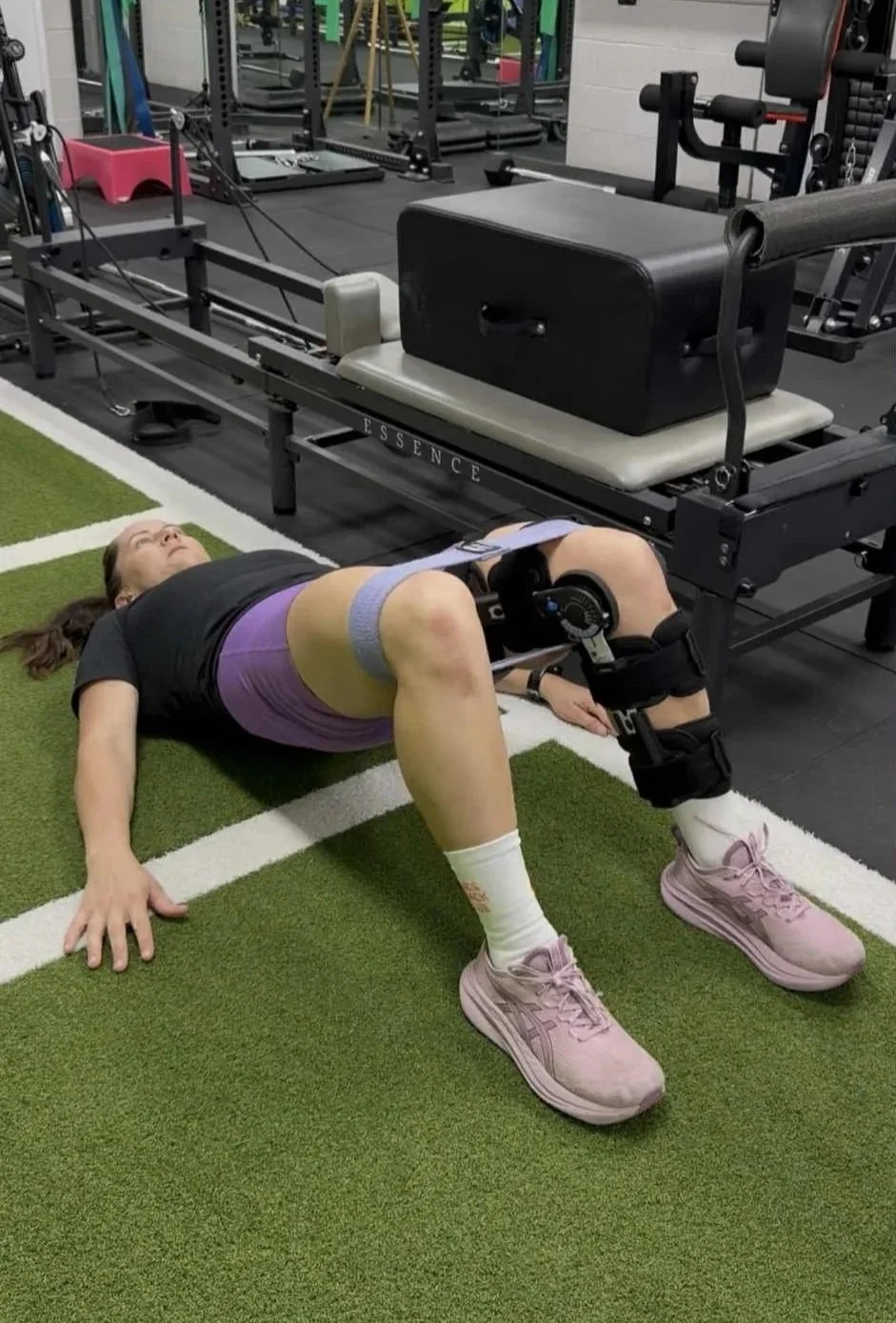
After rupturing my ACL in December, I chose to undertake a novel approach to ACL rehab and elect for a bracing protocol known as the Cross Brace Protocol (CBP) to attempt to heal my injury without surgery.
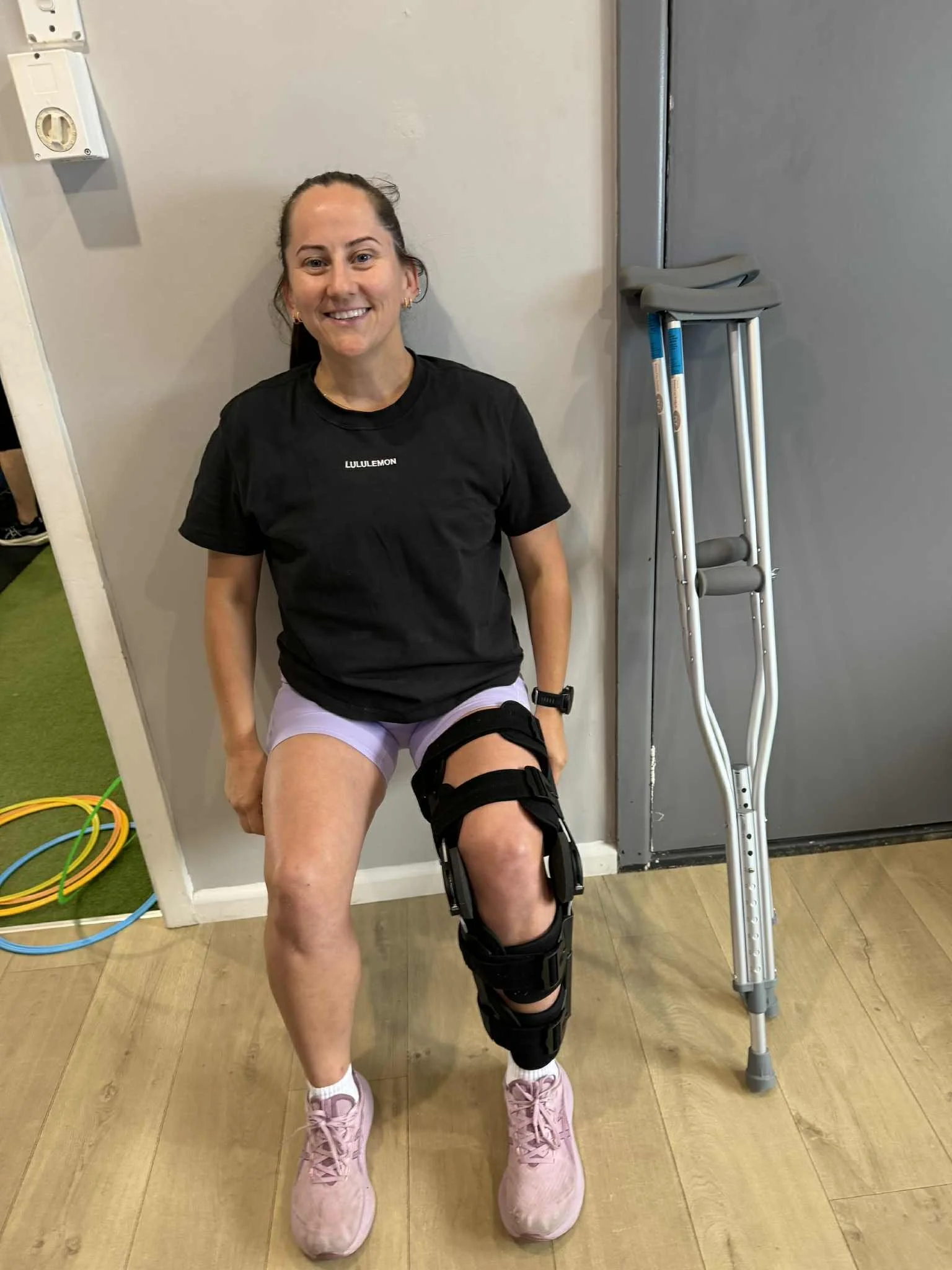
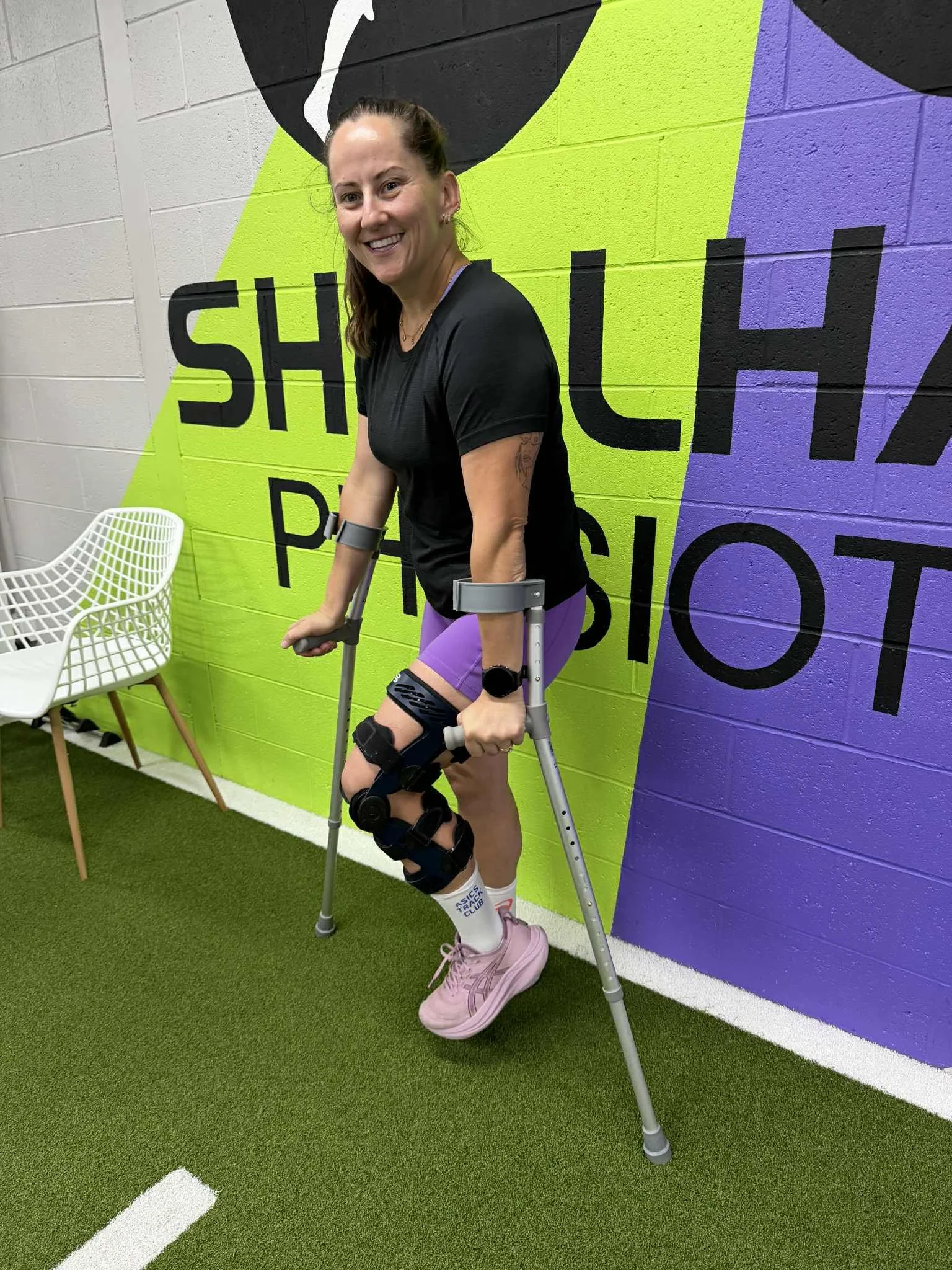
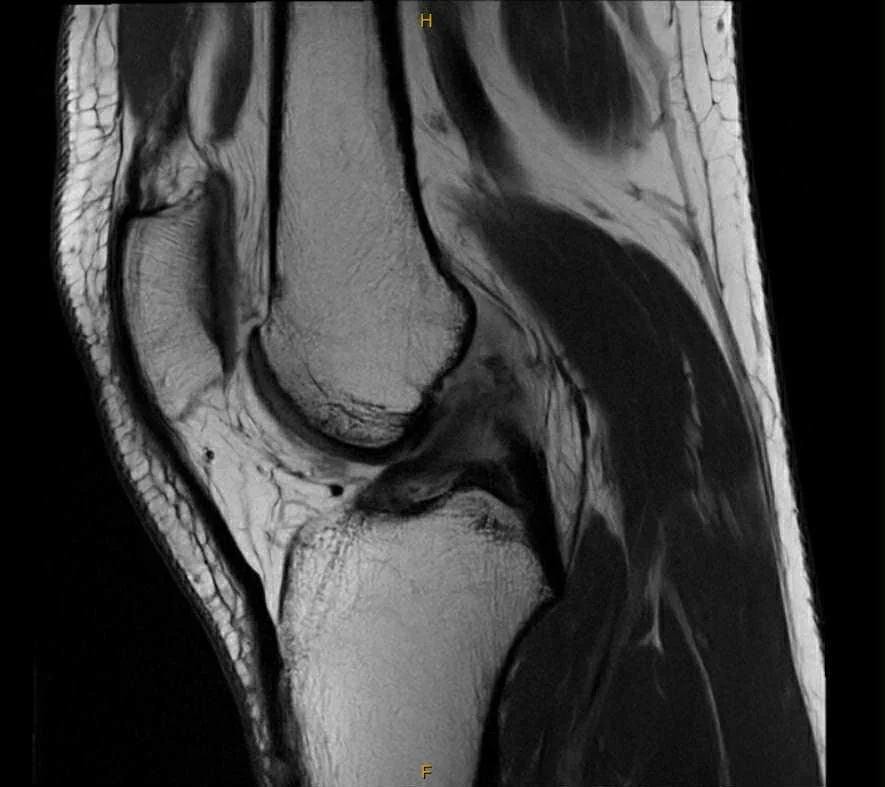
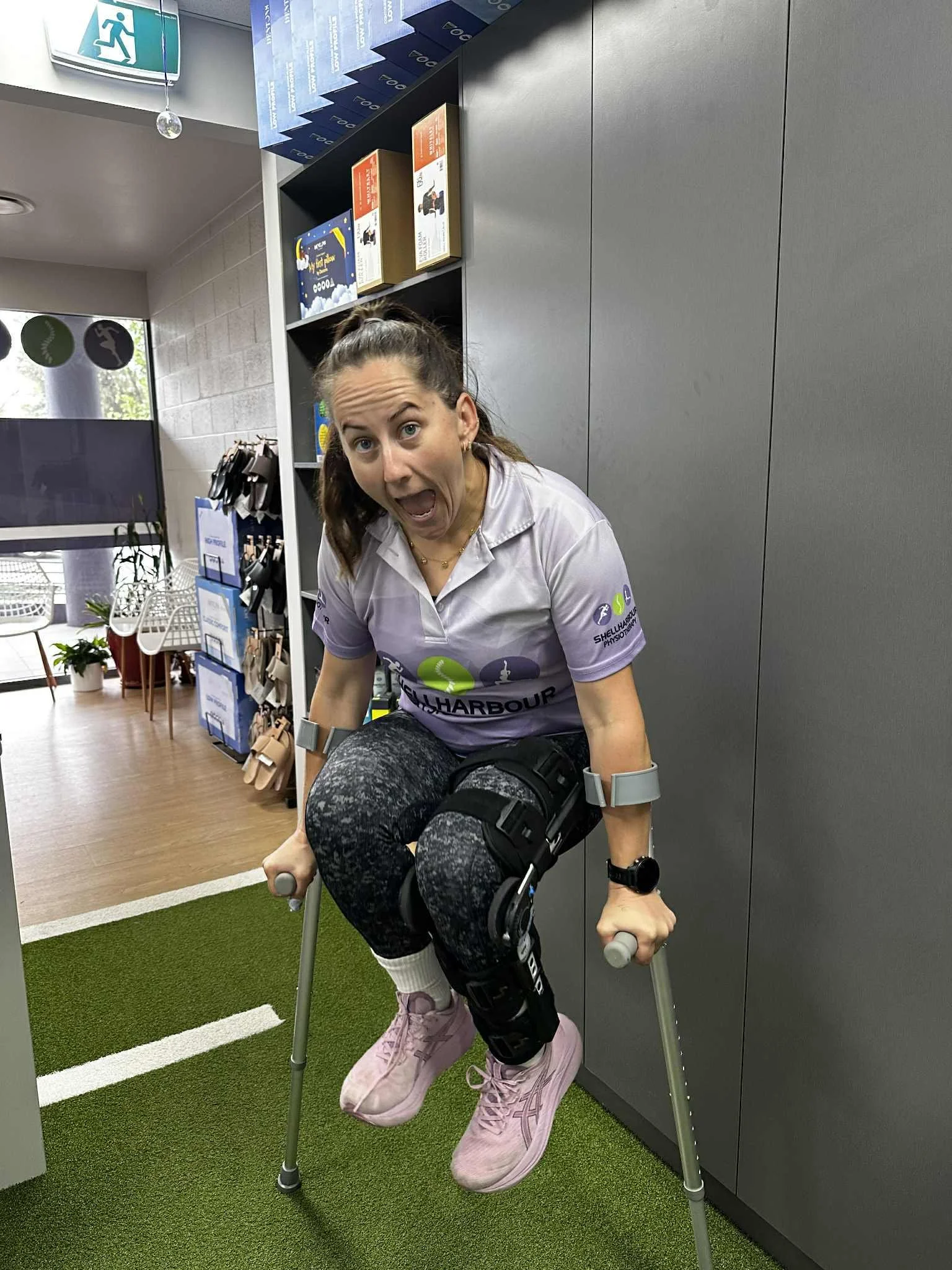
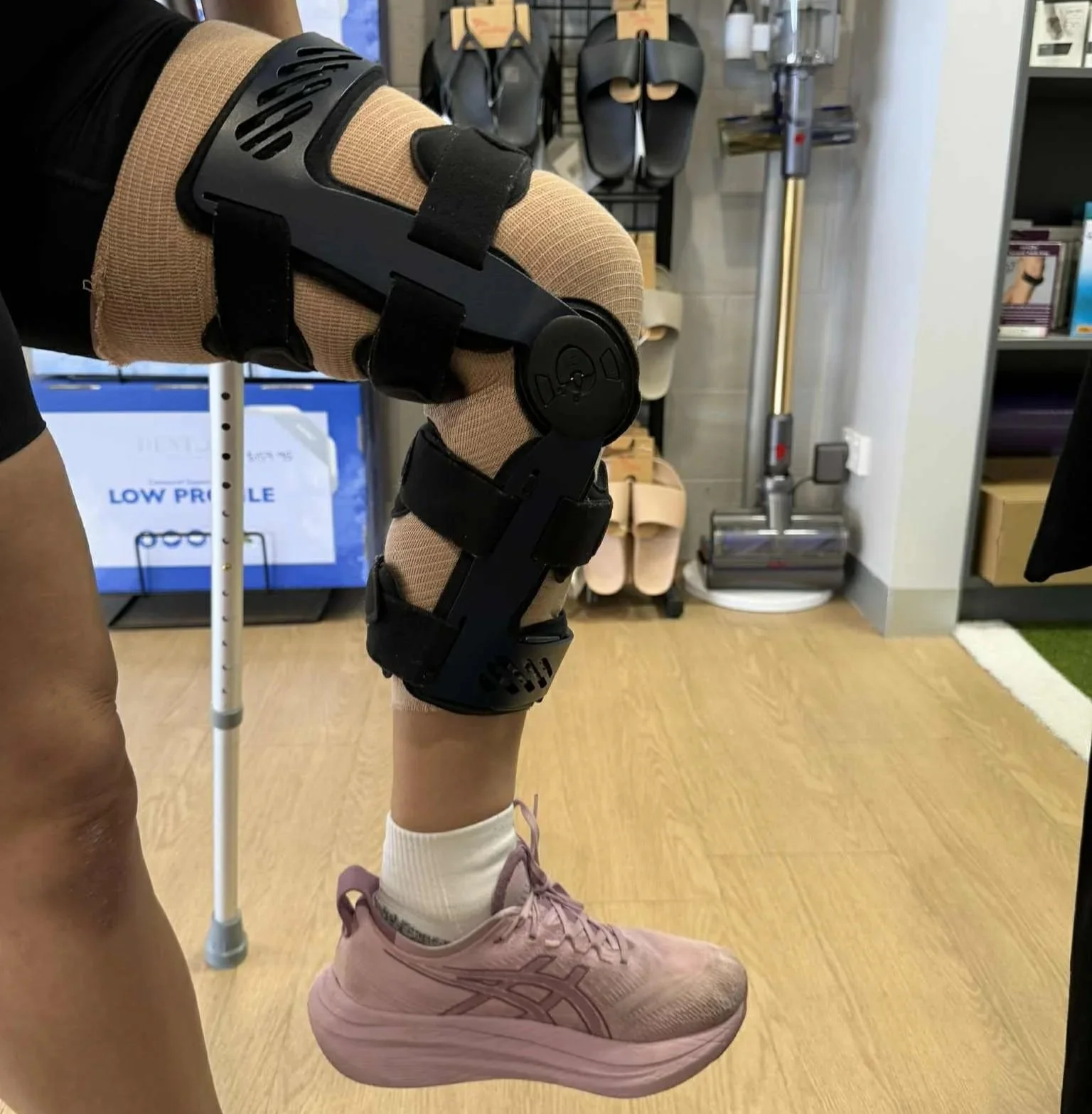
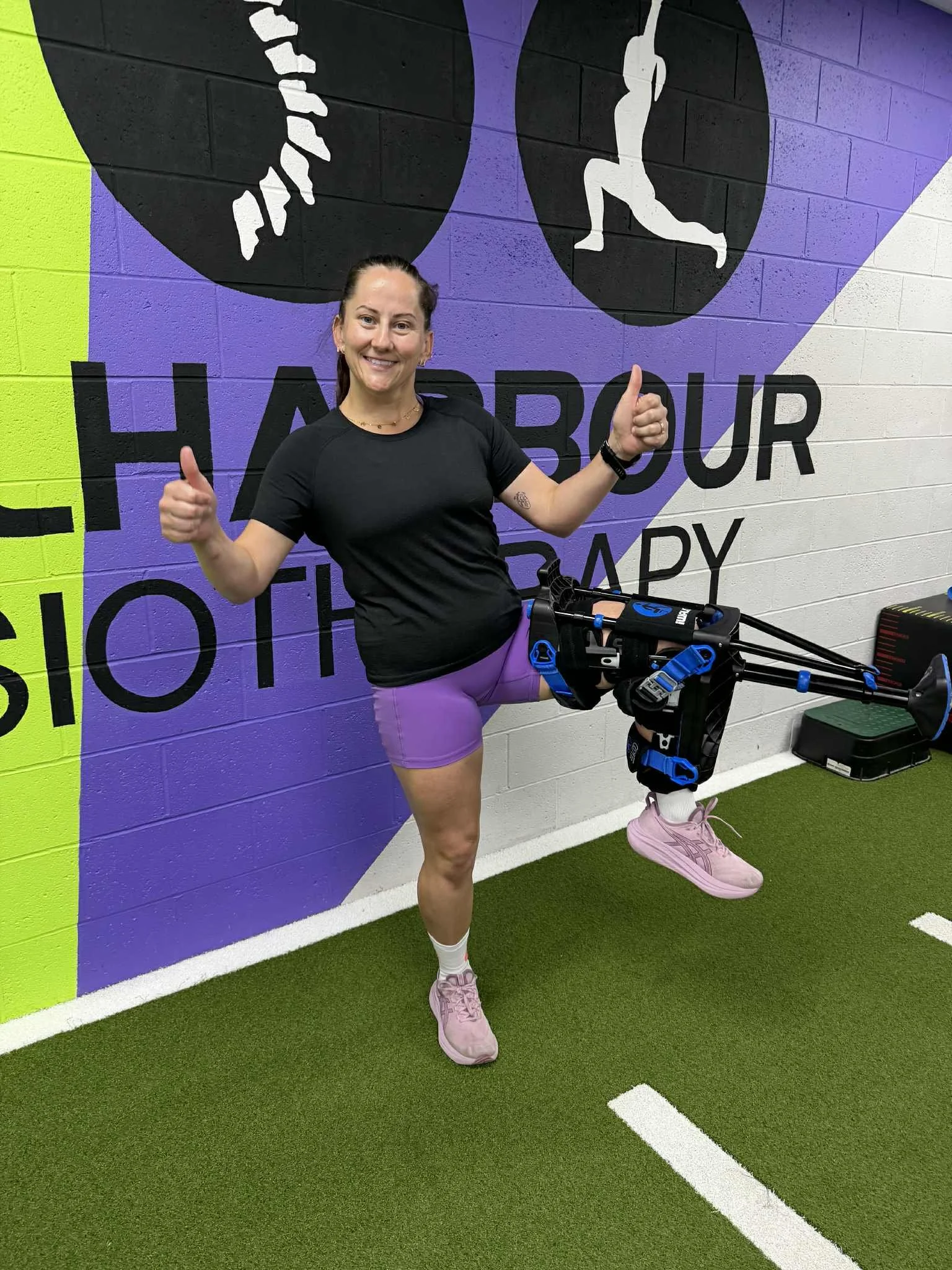
The protocol uses a hinged brace that can be fixed to varying levels of leg flexion and extension. It is not a specific brace, but rather a progressive brace management strategy designed to promote natural ACL healing. Developed by Dr Tom Cross, I became patient 1270 and the 40th physio to undertake this rehab protocol.
and WowWee, I have learnt a lot more than just knee rehab!
The whole program and further information can be found here
https://crossbracingprotocol.com/
The CBP is scientific, progressive, and super promising in the world of ACL rehab, and has the following key principles:
Early bracing (within 4-21 days)
INITAL FIXED KNEE FLEXION OF 90 DEGREES
Gradual increase in ROM
Early exercise, graded weight bearing
Progressive rehab and loading
I undertook an 8-week protocol which involved:
| WEEK | RANGE | |
|---|---|---|
| 1-3 | 90 LOCKED | Non-Weight-Bearing |
| 4 | 60-90 | Non-Weight-Bearing |
| 5 | 45-90 | Non-Weight-Bearing |
| 6 | 30-90 | Partial Weight Bearing |
| 7 | 10-120 | Full Weight Bearing |
| 8 | FULL ROM | Full Weight Bearing |
| 9-12 | FULL ROM | Full Weight Bearing and Wean from brace use |
I am nearing the end of my 12 weeks, with my repeat MRI and specialist follow up Monday, March 9
12 lessons I've learnt in the last 12 weeks
12. The protocol becomes your whole personality
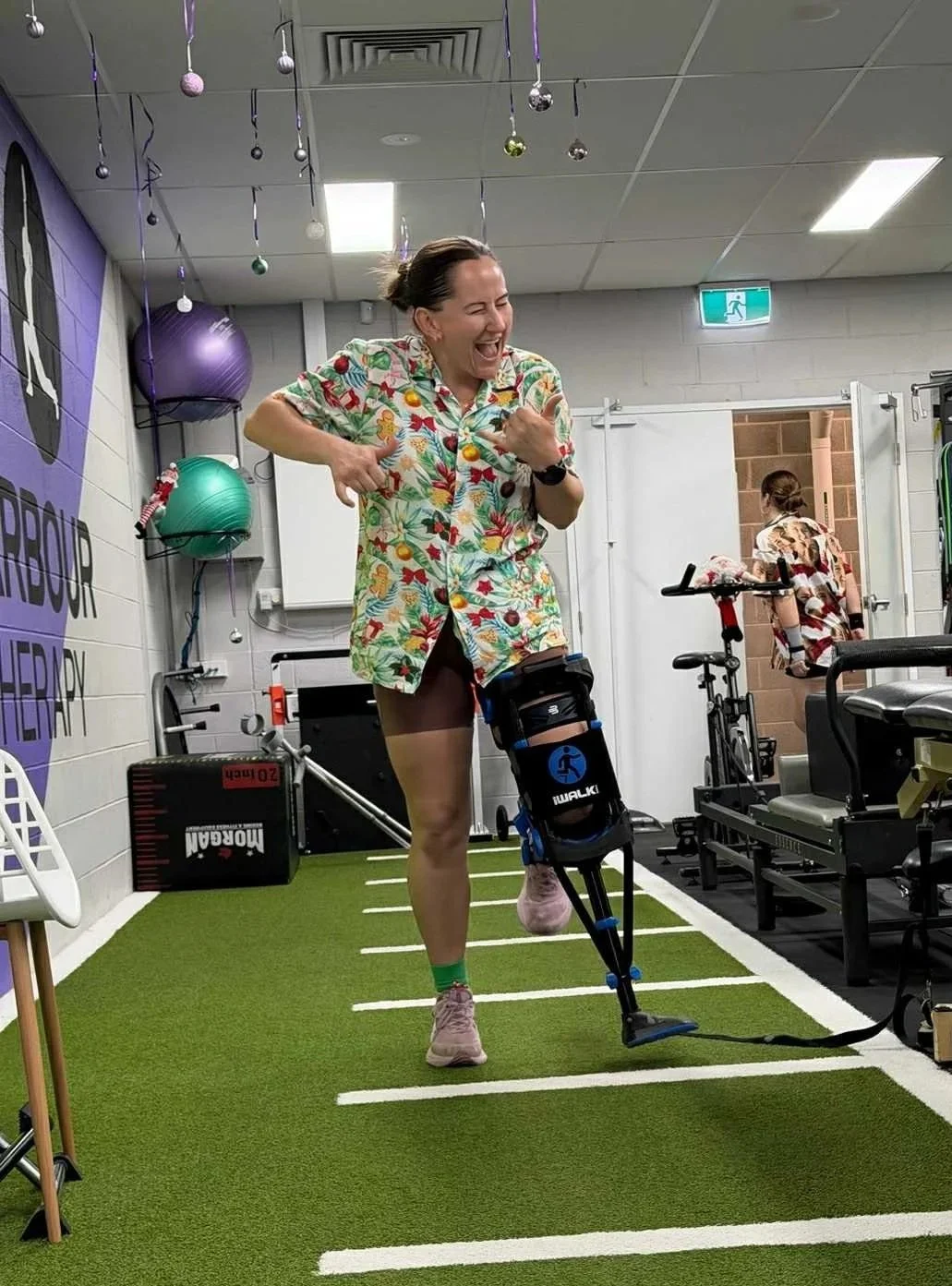
When you become the odd-looking gal with the zoomie scooter, robot knee, and peg leg you do have to adapt your identity to “extremely committed rehab girl”.
Extension? She's my bestie. The gym? There everyday. Social life? Sorry too busy wall squatting.
Thankfully I had a workplace of physio friends and a community of sporty mates that were super keen to chat about it because honestly not much else was happening in this time.
Lesson 1: Surround yourself with people who will happily chat about knees, and the self inflicted life decision you made.
11. Weight bearing: A distant memory
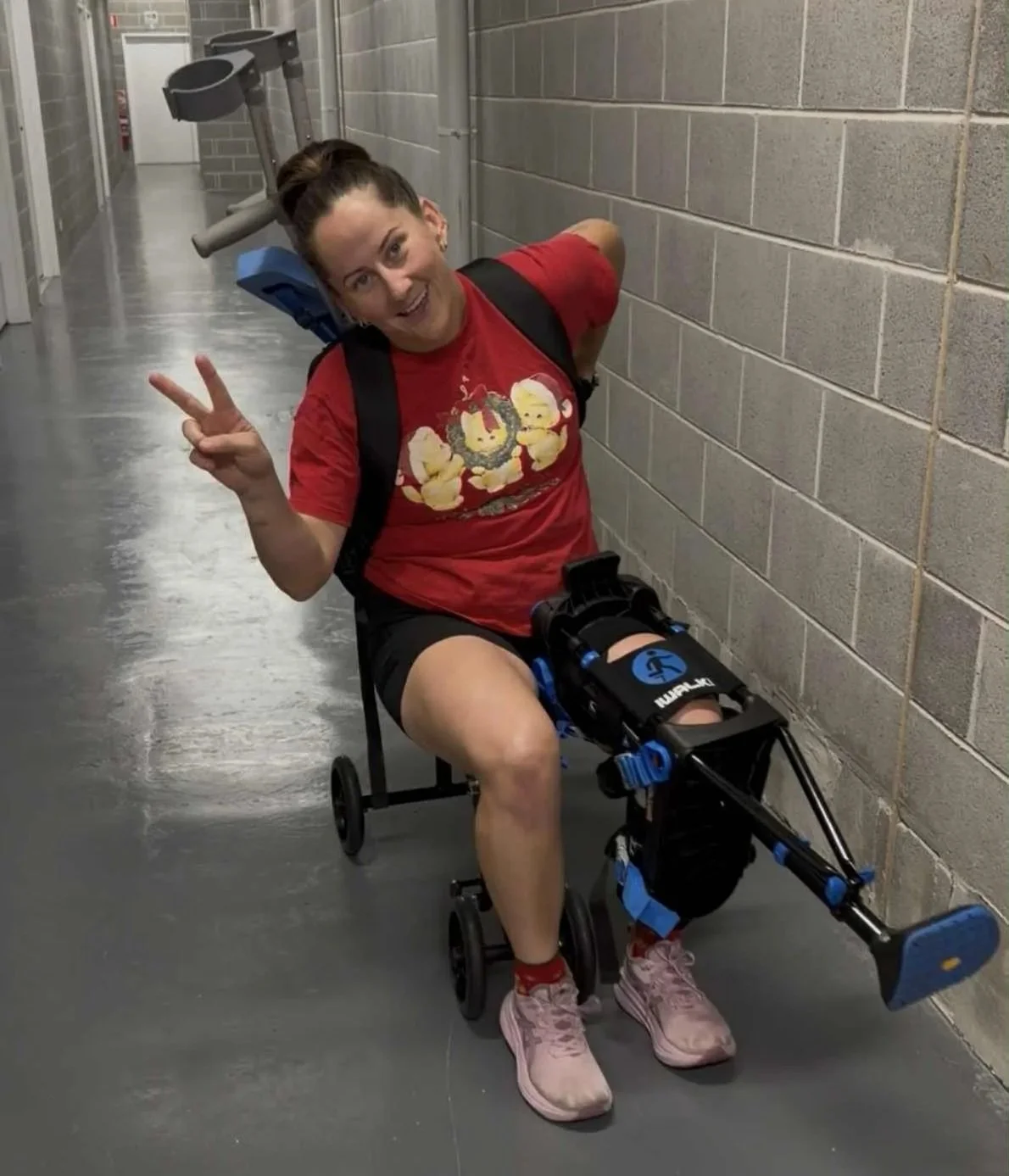
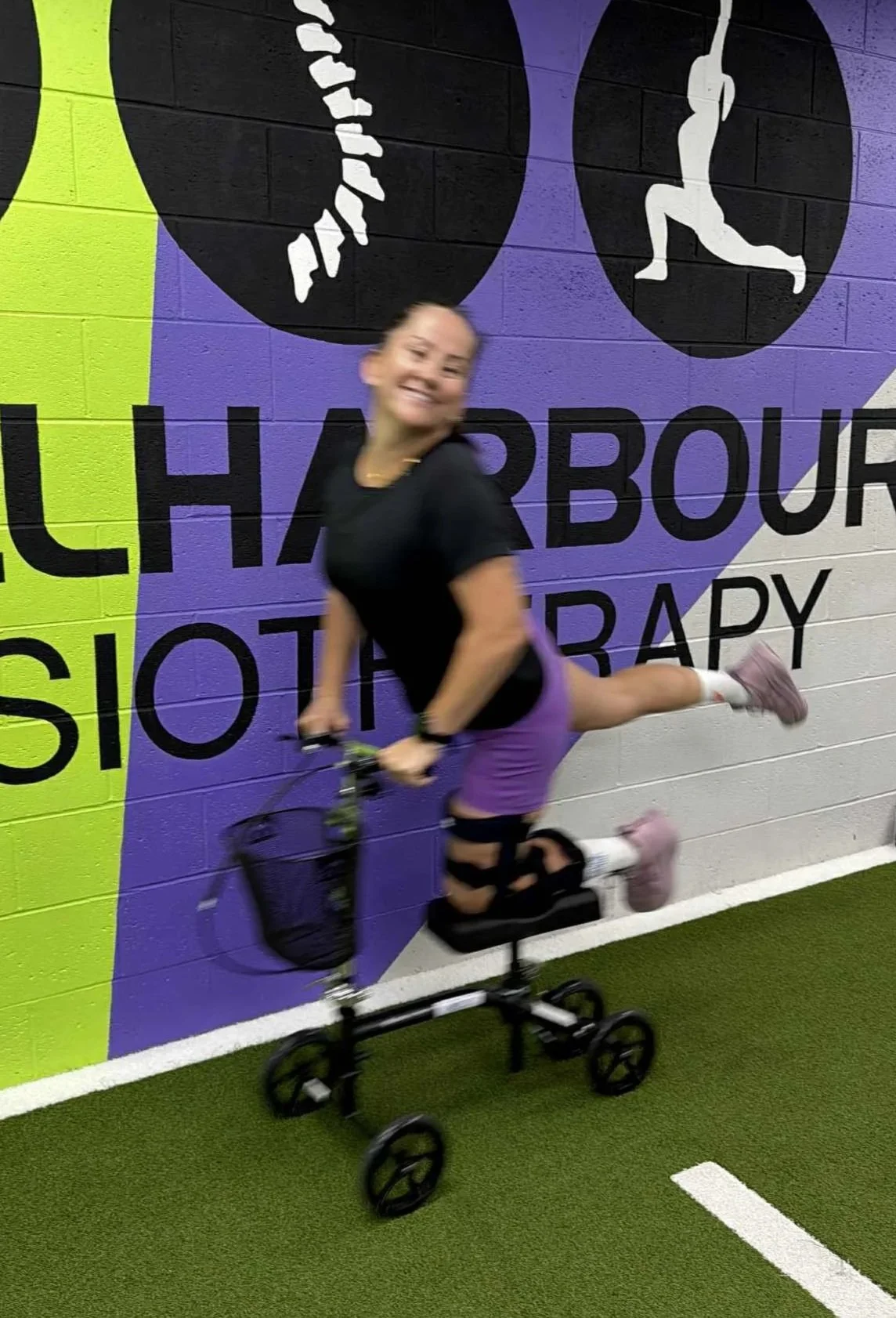
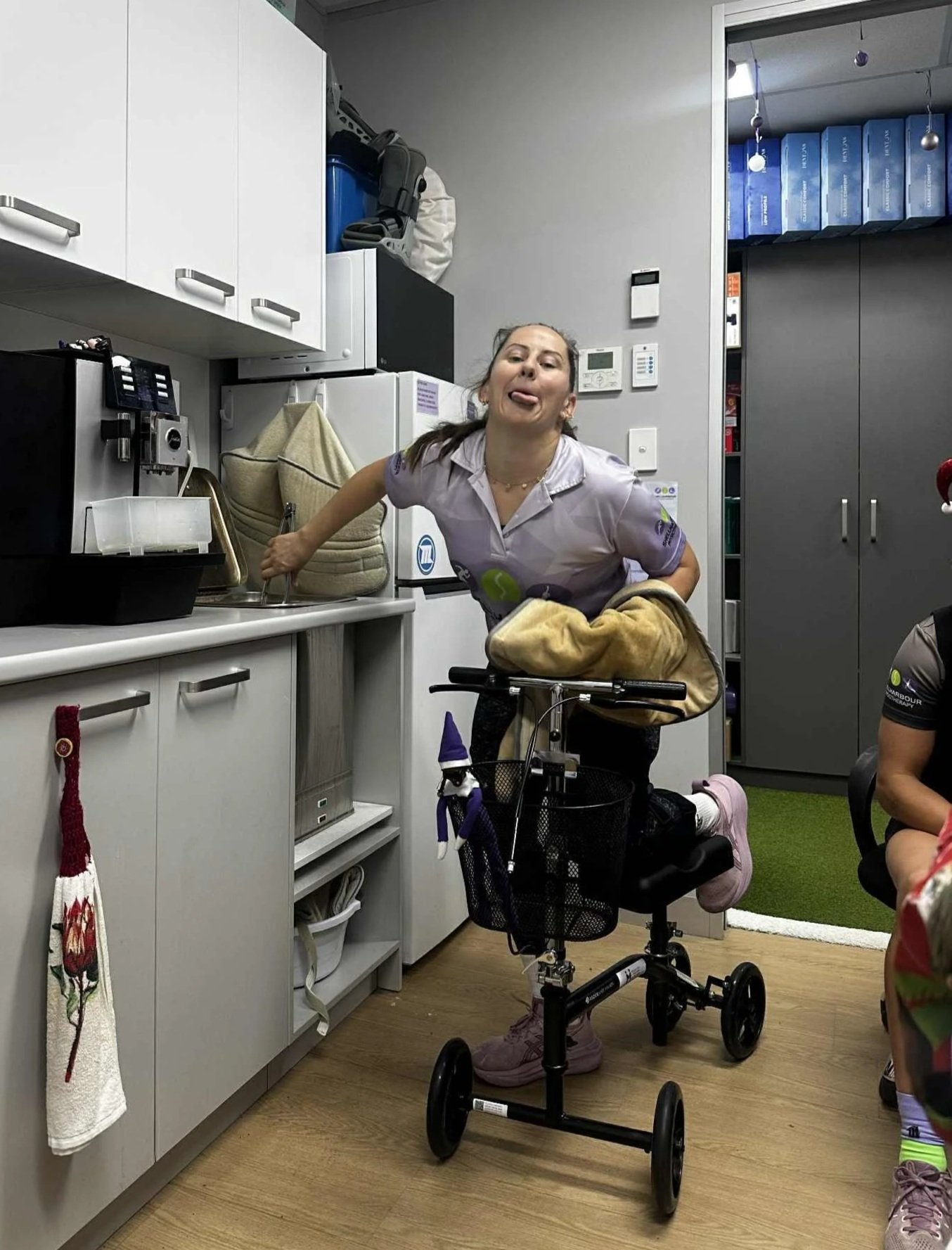
I was 5 weeks without weight bearing. This meant crutches (yuck x 100), knee scooters (yuck x 10 ) and the use of an iwalk (yuck). I am very lucky to have these resources available to me, but I still want to say it was REALLLLY hard. Planning every time I needed to move anywhere was a big hit to my normal level of independence and autonomy.
I also found I was needing to sit... a lot. Carrying a dead weight of a dangling leg, sometimes with the added weight of the iwalk attachment was tiring in a way I wasn't fully prepared for. I was optimistic at best with my thoughts that I’d be able to continue working as normal during this time - this was silly.
Stairs were the special nemesis in the non-weight bearing stage. Living in a home with a second story made for many decisions of the importance of whatever was upstairs vs doing without. Did I really need whatever I left upstairs? The effort said nah (unless I could bribe my 3 year old to ‘run an errand’ for me to get it)
Lesson 2: Just thinking about doing things will make you tired – sit down.

10. Extension becomes your life ambition
When you have been locked at a 90 degree angle for weeks, you become acutely aware of how much of the world requires a straight knee, and how a foot dangling behind you like a flamingo gets in the way and gets whacked on a daily.
Sleeping also became super creative, I felt like I was an upside down question mark of discomfort for 3 solid weeks.
That is to say, when I finally was able to straighten my leg I felt incredible, total bliss, I was unstoppable, never felt better.
Lesson 3: Never take a big leg stretch for granted, exercise that free will right now.
9. RIP quads
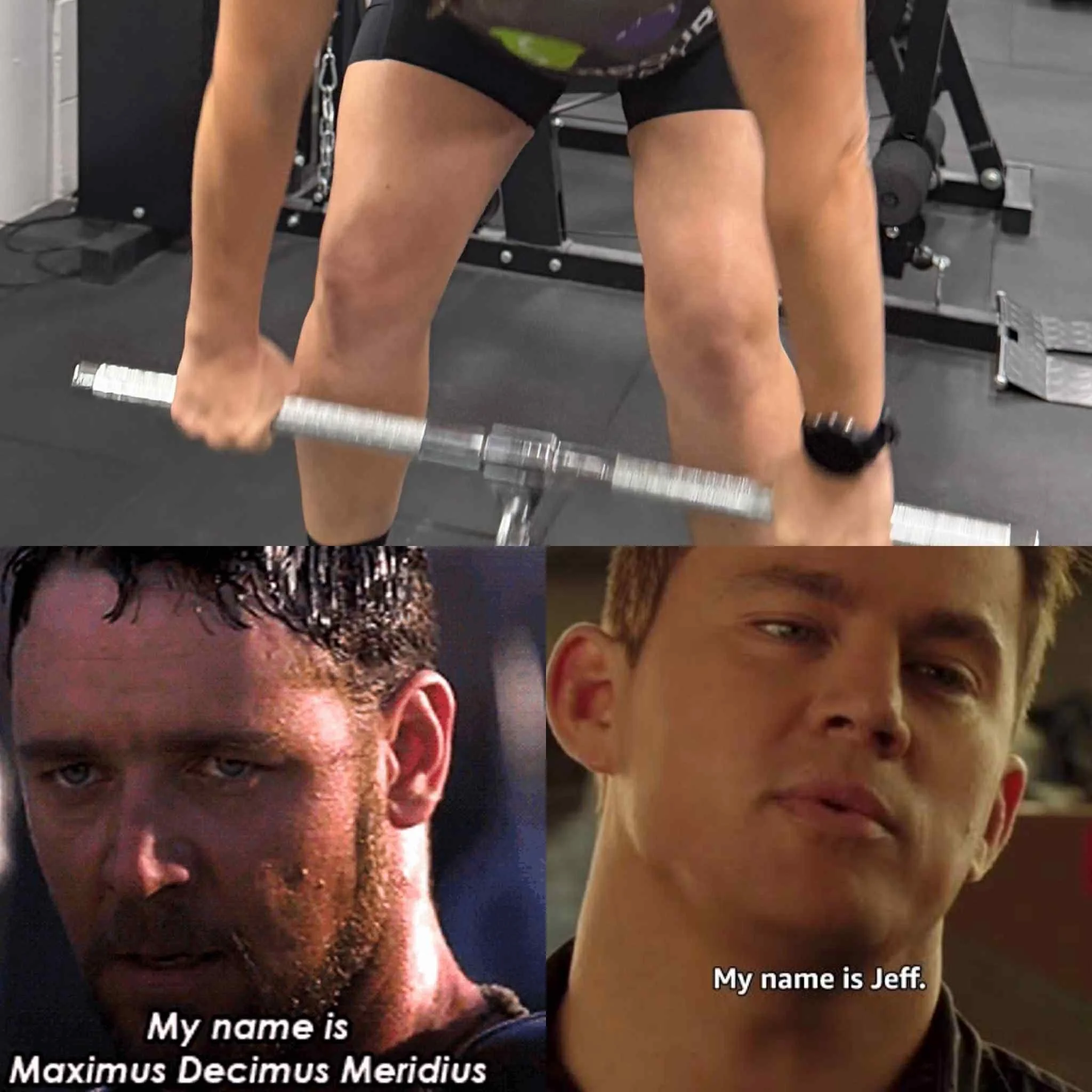
The saddest part. My quads have been the worst hit during the CBP. My injured leg, affectionately known as Jeff has shrunk down to a size I haven't seen since primary school. Meanwhile after weeks of contralateral leg exercises, crutches and scooting on one leg, old Maximus Decimus Meridis is thriving. Now these legs are more age gap sisters rather than twins.
Lesson 4: Nothing lasts forever (do a squat for me x).
8. There’s alot of opinions about CBP - and you’ll hear about them
Mention the CBP at the pub: “that's cool” “I didn’t know that” “you’ll have to let me know”.
Mention the CBP in a room of physios: “THATS INSANE” “OMG LOVE THIS” “I HATE YOU” “REALLY RISKY DONT YOU THINK” “YES THE EARLY EVIDENCE IS GREAT” “I WILL CURSE YOUR DESCENDANTS”.
I’ve never seen the physio world this fired up, or maybe it’s just been the first time I’ve ever noticed, tomato tomato. Either way this tomato finds it quite funny that there are a lot of people ready to throw hands over a new advancement in the world of ACLs.
Lesson 5: Two things happen with the CBP: your knee will be stuck at 90°, and everyone will suddenly have a very strong opinion about it.
7. Queen of brace compliance
The CBP is, above all else, a protocol that relies on strict compliance.
The brace time is strict. The range limitations are strict. The weight-bearing rules are strict. None of these things are flexible, and they’re there for a reason. If you can’t fully commit to the brace, the movement limitations, and the weight-bearing restrictions, it probably isn’t the right option for you — and that’s okay.
The reality is that following the protocol properly requires a fair bit of planning and adjustment in daily life.
I was lucky in a few ways. It was my left knee, so I could still drive, which makes life significantly easier when your leg is essentially a permanently bent accessory. I also had access to mobility aids, which made the non-weight-bearing period a lot more manageable.
Being a physio was also a big plus for navigating the CBP. A big part of our job is thinking about the real-life side of injury — the little logistical problems that pop up during recovery. Turns out that skill comes in handy when you’re the one trying to navigate daily life with a knee that can’t straighten.
Having a physio guiding you through those first few weeks — giving feedback, reassurance, and the occasional reality check — is incredibly important.
Lesson 6: Comply. Complain too, but just comply more.
6. The power of the lived experience
In some epic foreshadowing worthy of a Sarah J. Maas novel, I was the first physio in our clinic interested in the CBP and undertook a course on it back in 2024. At the time this felt like a purely academic purpose; I’d listened to some podcasts, read some articles and had some patients I was wondering could maybe go down a different path.... a protocol worth understanding.
Fast forward almost two years later, and I found myself no longer studying the protocol… but living inside it. Plot twist, those are two very different experiences.
Reading about the CBP is neat and logical. The brace stays at 90°. Weight bearing is restricted. The timelines are clear. Its tidy and clean. Living inside the protocol is messy, chaotic and scrappy. Mostly involving daily logistics of living your life; the brace fits and adjustments, the trips on crutches, the stacks on the scooter, the general clumsiness and lack of speed you now possess when you move.
Things like sleeping, stairs, showering, getting dressed, or carrying literally anything while non-weight bearing were some of the many micro irritations experienced. Small problems appear everywhere and suddenly require creative problem solving; i.e. bumbags are life and never trust a knee scooter’s turning circle.
It also gave me a huge amount of empathy for patients navigating these kinds of restrictions.
Lesson 7: The CBP is interesting to study. Living inside it is an education.
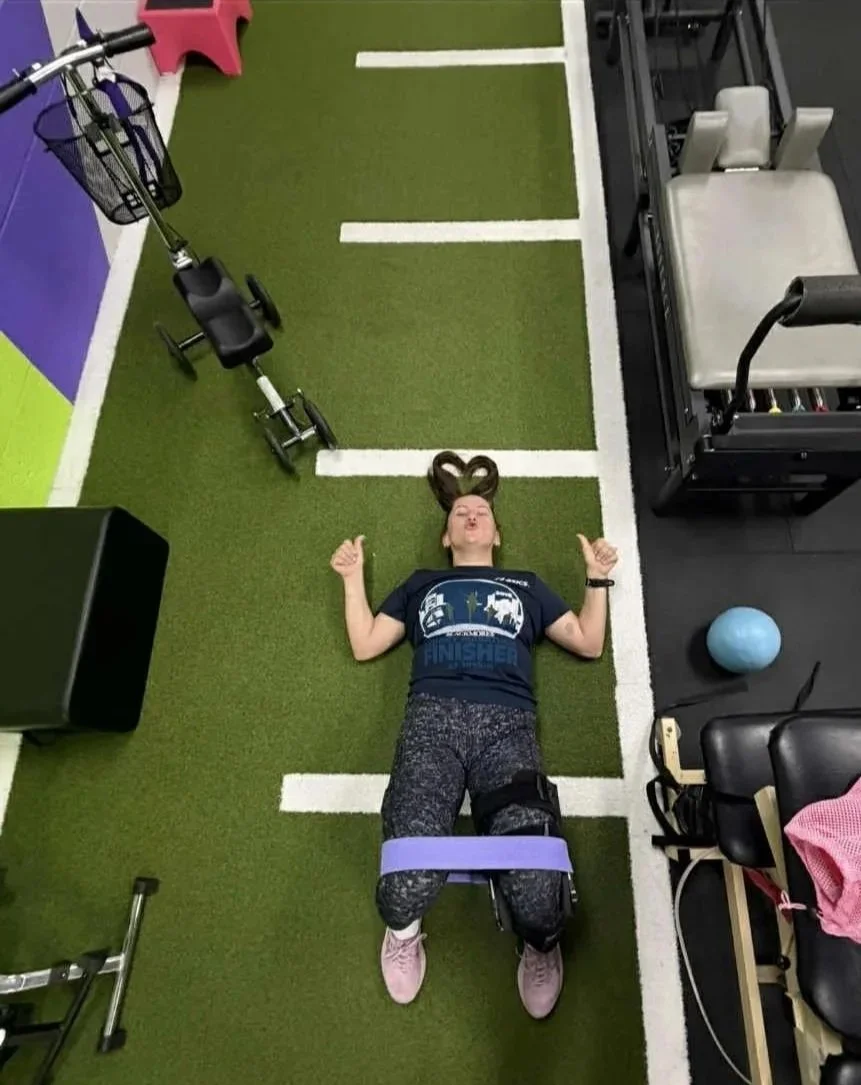
5. Rehab diScipline matters more than perfection
The CBP is strict, but that doesn’t mean flawless execution of it every second of the day. Real life is messy. You’ll occasionally misjudge a movement, encounter a logistical challenge, or find yourself negotiating daily tasks in ways the research papers never quite anticipated.
You will also make a few small mistakes along the way. One night in the brace locked at 90 my daughter cried in her sleep, I was half asleep walking to her room – without my crutches and in a weird crouched crab. I didn’t even realise at the time, it was only when I left her room, I realised and freaked out and crawled back to my room. What a weirdo.
The other time was on glorious day 1 of my brace, I had my first physio session. I forgot my whole head and when my brace was removed, I luxuriously straightened my leg over the built up pillows and rollers set up to maintain 90 degrees during treatment. As Hermione would say “what. An. Idiot"
I may eat my words, but I feel what matters far more is the overall discipline of the process — respecting the brace, respecting the restrictions, and showing up for the protocol consistently day after day rather than the micro mistakes along the way.
Lesson 8: The CBP doesn’t require perfection. It requires discipline.
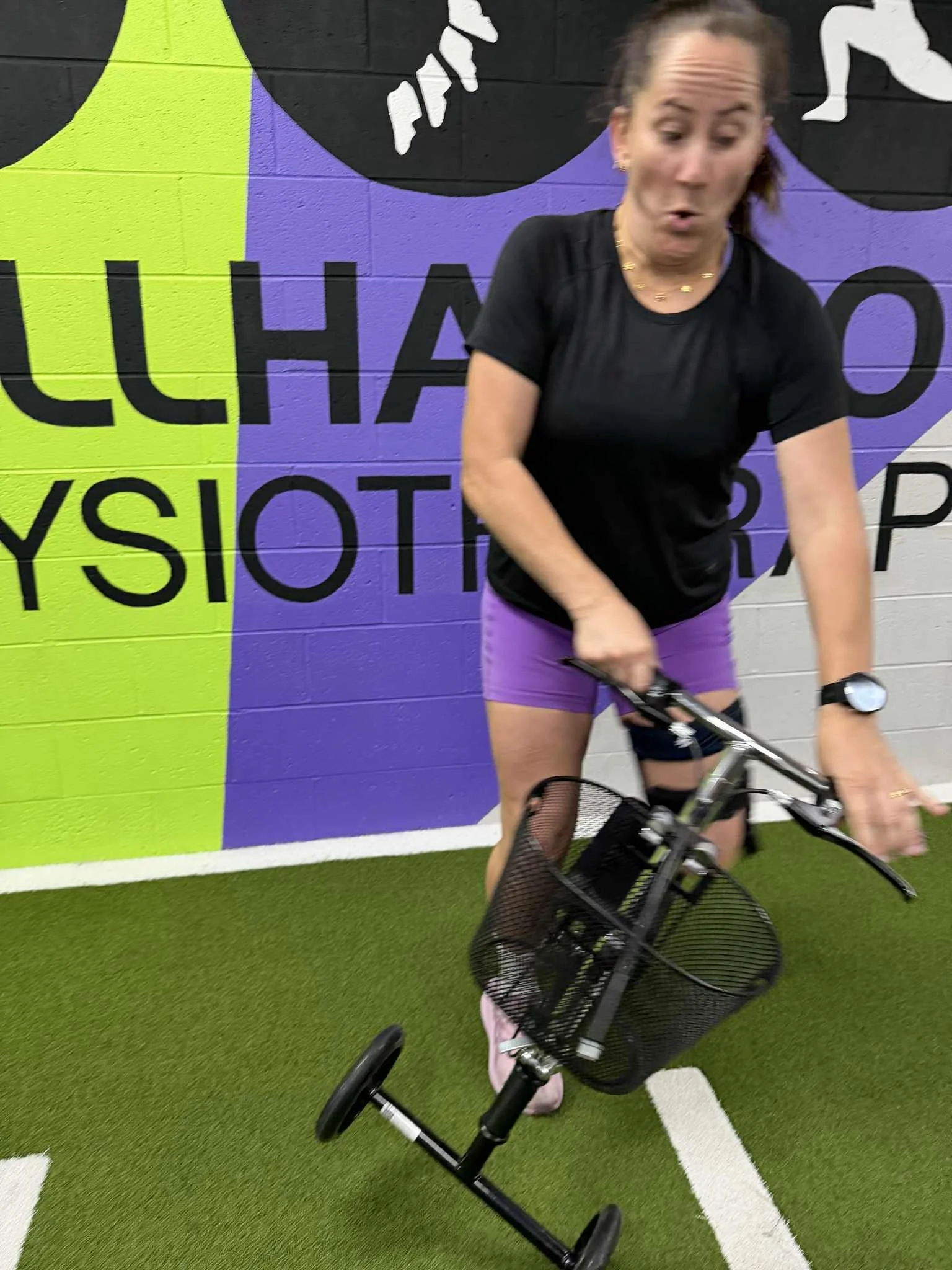
4. The psychology of the CBP
One thing that doesn’t get talked about as much in the protocol papers or the literature is the psychological side of wearing the brace. Being restricted in movement for weeks at a time isn’t just physically challenging — it’s mentally challenging as well. Your independence changes overnight. Simple tasks suddenly take more time, more planning, and often more help than you’re used to needing.
The protocol itself is very clear. The brace stays on. The restrictions are strict. The timelines are long enough that the whole thing can start to feel a little relentless.
The real psychological challenge, however, might actually be the gym.
Rehabilitation in this phase is important, necessary… and, at times, profoundly boring. Very controlled exercises. Very long isometrics. Very small ranges or none at all. Very repetitive movements. Very, very boring.
What makes a huge difference during this time is having strong social support around you. People who can help with practical things at home, help with daily logistics, and generally make life a little easier while you’re navigating the protocol.
For me, this was especially important with young kids. Parenting doesn’t pause just because your knee is in a brace. Add in managing pain, continuing to work, and trying to follow a strict rehabilitation protocol, and the mental load can add up quickly.
Having people around you who understand what you’re navigating — and who can step in when needed — makes the whole process far more manageable. I had meals dropped off by a friend, my mum stepped in to help with our family’s washing, multiple friends checked in, and even Dr Tom Cross himself was regularly checking in and offering words of support. Those small acts of support made a big difference in getting through those first few weeks.
Lesson 9: Brace for knee, support for me.
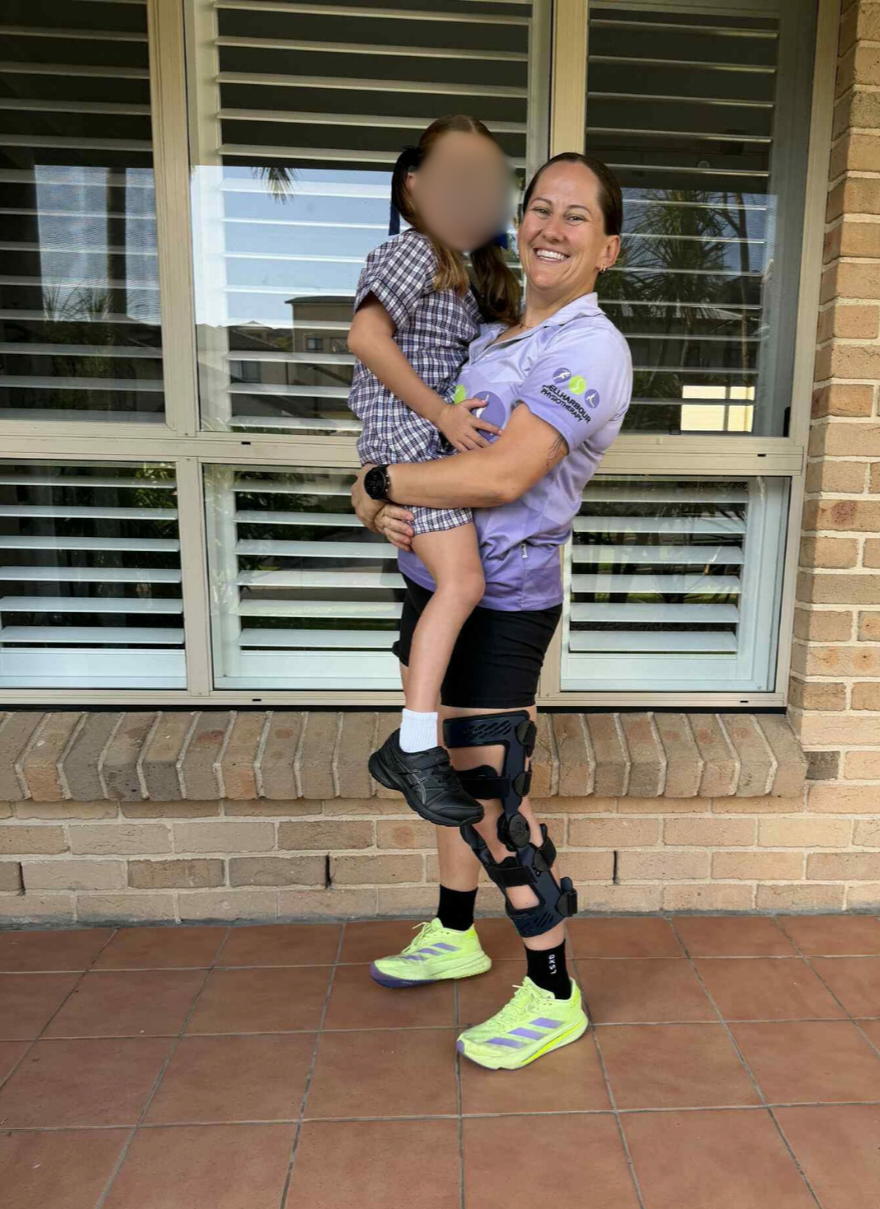
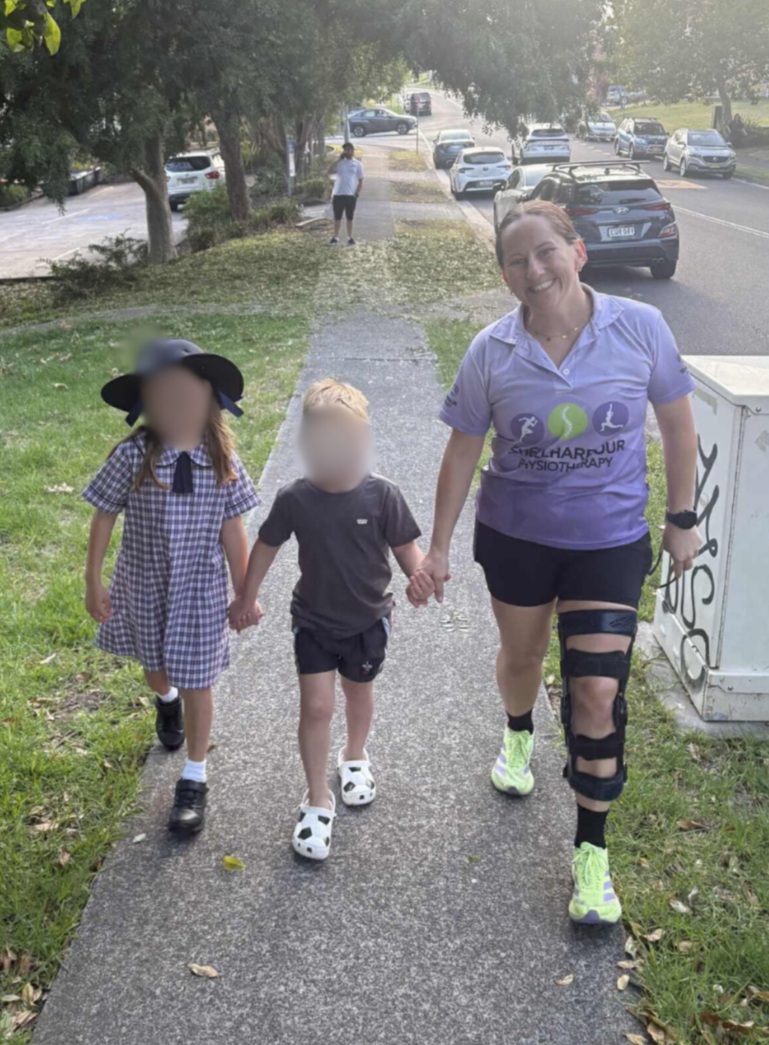
3. The uncertainty is certainly uncomfortable
During the CBP, even when things are going well, there’s still a quiet layer of uncertainty sitting in the background of the whole process. Progress is reassuring — the knee feels stable, the milestones are being ticked off, and the protocol is unfolding the way it’s supposed to.
But until the later stages, there’s always that small question lingering in the back of your mind about how things are actually going on the inside.
Rehabilitation often exists in this strange space where things can feel positive and uncertain at the same time. You celebrate the progress, follow the plan, and keep moving forward — while also knowing that a big part of the story is still unfolding.
For me, that moment of truth is the week 12 MRI — the final boss of the CBP. Until then, I simply don’t know how everything has gone.
I was told there was about an 85% chance the protocol would work for me. Which also means… there’s another percentage sitting there quietly in the background. Waiting twelve weeks to find out has been a huge lesson in patience, and in learning just how uncomfortable uncertainty can be.
Lesson 10: The noisy part of my brain is wondering if I’ve accidentally ruined everything.
2. Times are changing
CBP definitely sits in that uncomfortable space where new ideas often live, interesting, promising, and a little controversial. It’s something I’ve thought about more than once: will this age like milk or like wine?
Maybe in 10, 20, or 30 years this whole thing will be hilarious. If that’s the case, hello future Kirrilly, hope the knee held up, tried my best, but the gym was boring. Or maybe the CBP will become a mainstay in ACL management and this will age beautifully – yeah that's right you're welcome future Kirrilly, hope you appreciate how boring the gym was.
But one thing I kept coming back to was that the time was going to pass anyway. Twelve weeks was going to happen regardless of what I chose to do with my knee. So why not spend that time trying something that could potentially allow my ACL to heal? Medicine and rehabilitation are always evolving, and new ideas only move forward if someone is willing to try them. Personally, I’d rather sit on the side of progress — curious, open to new evidence, and willing to admit if something turns out to be a mistake. That’s the nature of progress.
Lesson 11: The time is going to pass anyway, you may as well spend it trying.
1. The 12 week MRI - the cliffhanger
The 12-week MRI next week has got me feeling like I'm 90% of the way through a Sarah J Maas banger; the moment where the truth is revealed and everything suddenly makes sense. But if SJM has taught us anything, it’s that this is absolutely not the finale. It’s the cliffhanger. The dramatic moment where you realise the real story is still unfolding.
After twelve weeks of a knee locked at 90°, watching my quads slowly disappear, surviving boredom in the gym, getting opinions thrown at me and generally living inside the protocol... The MRI is here. The moment where we find out is the ACL starting to heal?
Lesson 12: Remain an optimist
Love,
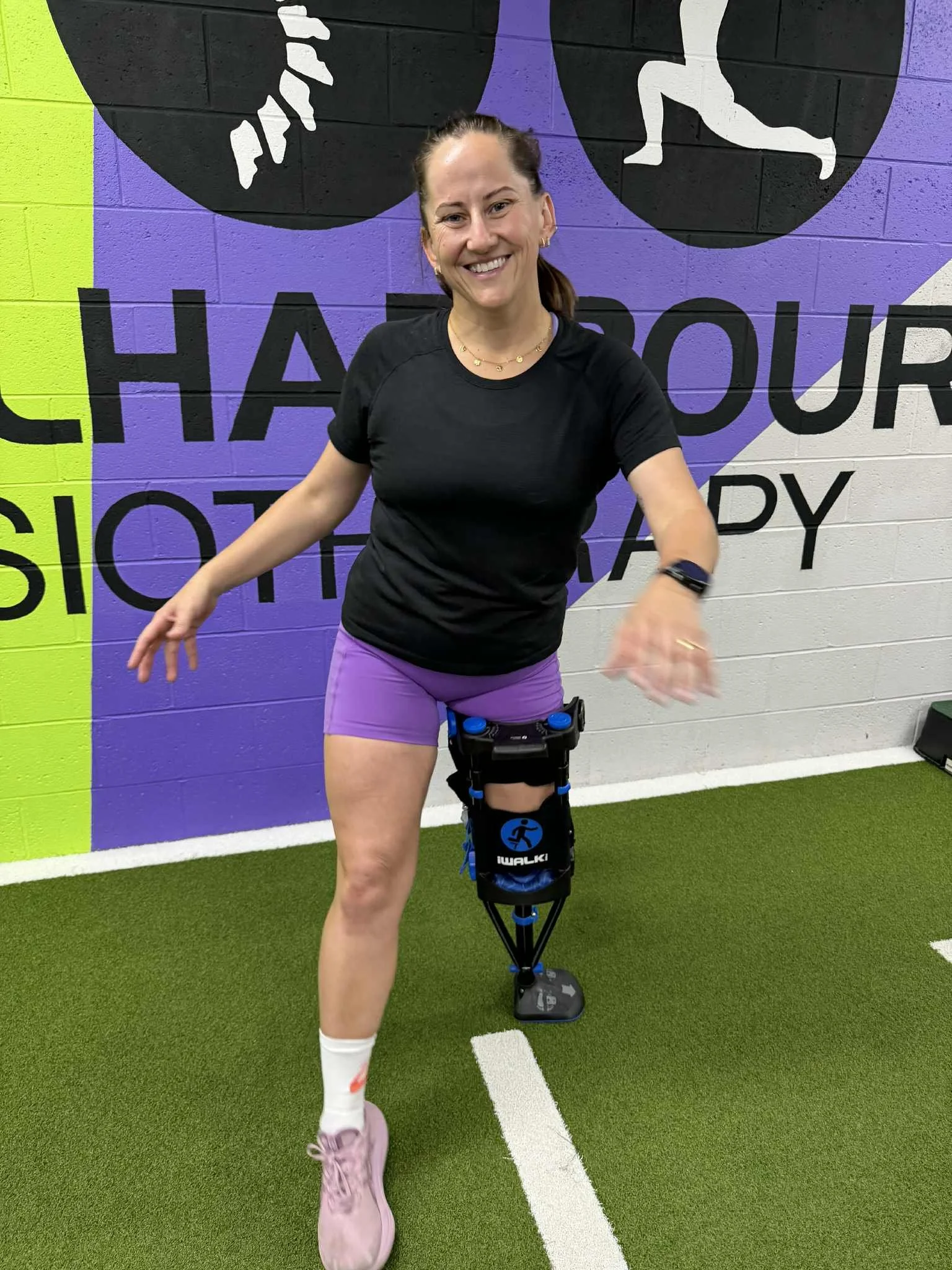
Kirrilly — book-loving, gym-hating paeds physio who desperately wants to run again and is cautiously optimistic there may still be an ACL in there somewhere. x